
Signal-path reasoning
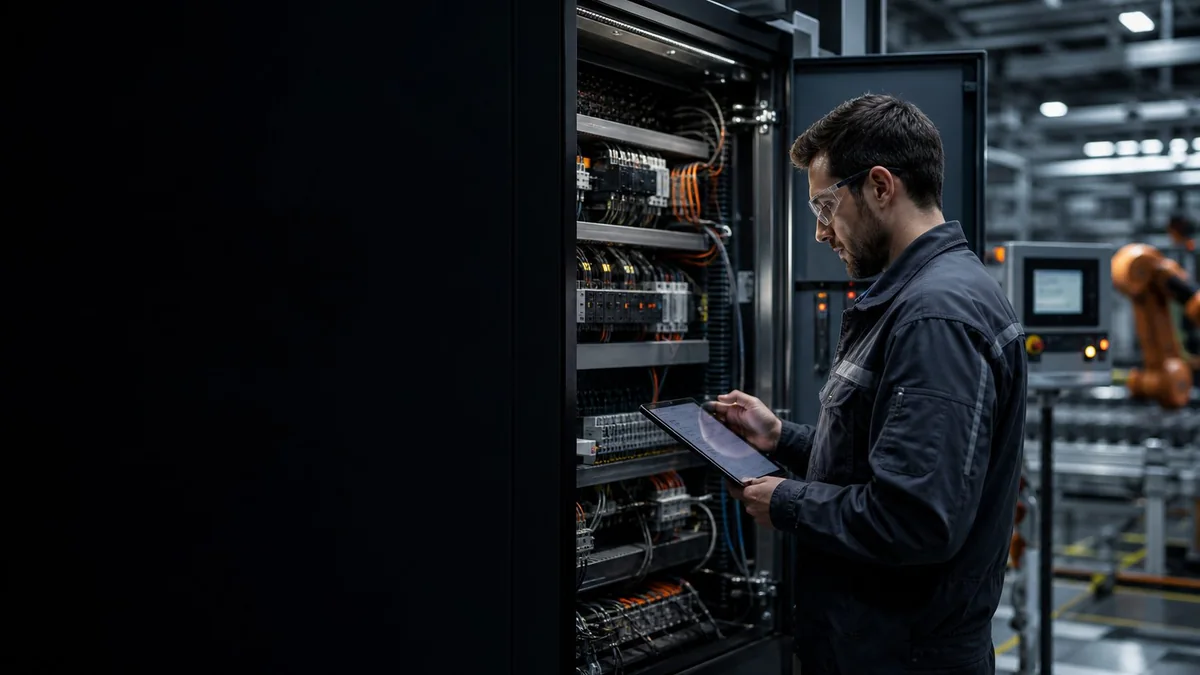
Following a fault from sensor to decision to output rather than guessing.
Industry
In automation, the machine is only half the system — the other half is the logic that makes it behave. Hiring for that layer means testing for reasoning, not just hands.
What shapes the work
Automation companies and system integrators live in the control layer. The hardware — motors, actuators, conveyors — is often the reliable part; the difficulty is in the logic that coordinates it and the interfaces where separate systems must agree. An integrated line fails not because a component broke but because a timing assumption no longer holds, or two subsystems disagree about state. Those faults produce no broken part to point at.
This shapes hiring toward reasoning over manual skill. The valuable automation technician follows a signal from sensor to input to decision to output and knows where the chain breaks; the valuable integrator technician understands how separate systems hand off to each other and where those handoffs fail. Both are diagnostic dispositions, and both are hard to assess with a conventional interview that focuses on what equipment someone has touched.
The recurring automation hiring mistake is the read-versus-write confusion. Most automation technicians read control logic fluently and diagnose without modifying programs; some write and modify. These are different, differently priced skills, and a vacancy that does not distinguish them attracts both and assesses neither. Deciding which you need before you advertise is the single most useful step.
Priorities
Roles
Automation hires for the control layer first and the hardware second.
The core profile: PLC environments, control systems, line diagnostics and process behaviour.
Explore profile
Cross-domain diagnosis where control faults turn out to have a physical cause.
Explore profile
Proving integrated systems through FAT, SAT and handover.
Explore profile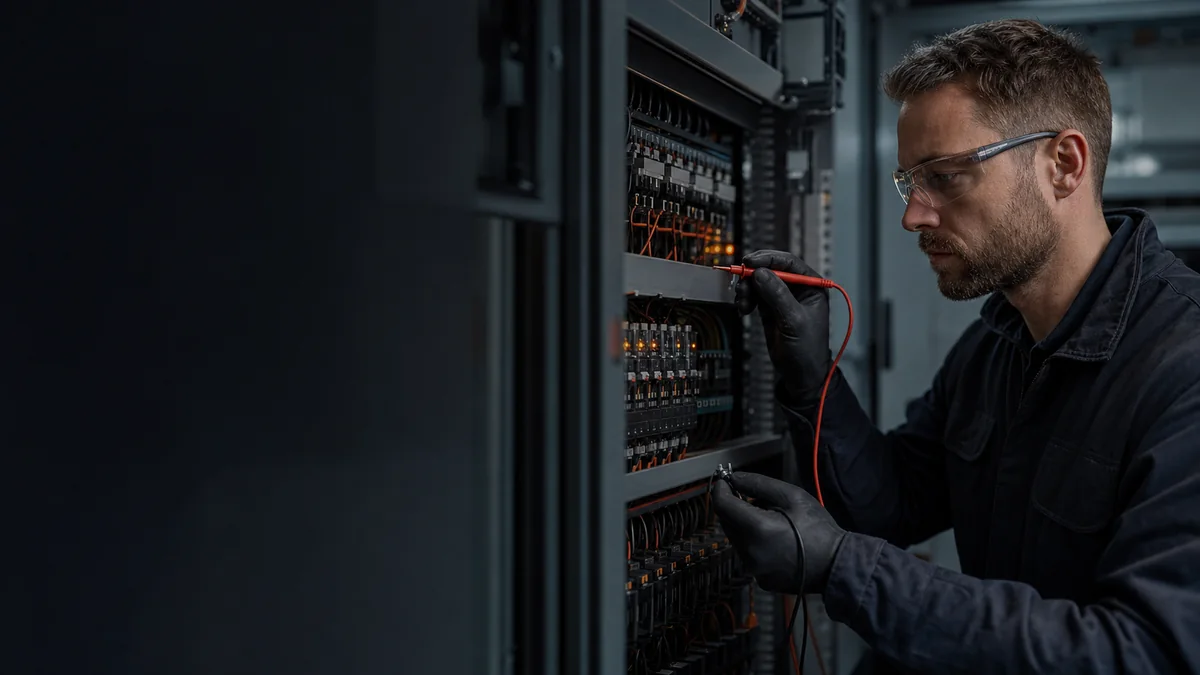
Measurement and testing on the electrical layer of integrated systems.
Explore profile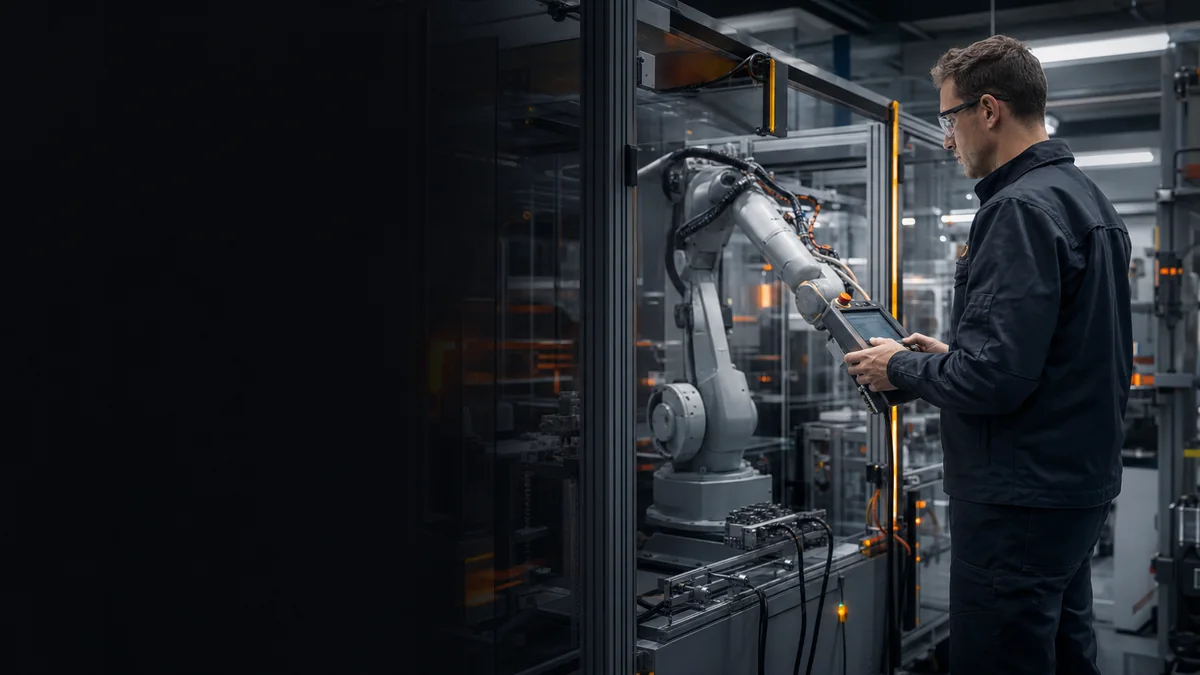
Robot cells integrated into larger automated lines.
Explore profile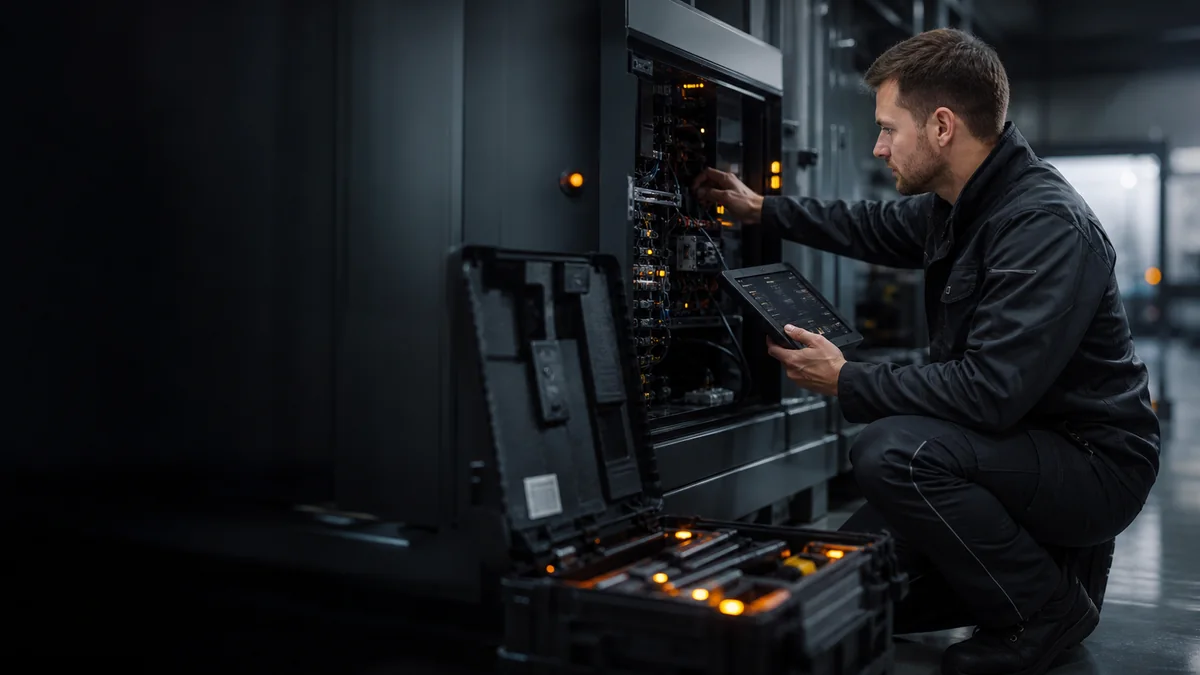
Supporting integrated systems at the customers who run them.
Explore profileEquipment and systems
The value is in the connections. Ask how they diagnose a fault that spans two subsystems.
Before you write the vacancy
Whether you need someone who reads control logic or someone who writes it.
Which subsystems must agree, and where the handoffs are.
The systems and platforms, weighted below diagnostic reasoning.
Whether the role proves new systems or supports running ones.
Integrators frequently support multiple customer sites.
Recognition and work authorisation depend on the individual and country.
FAQ
Some do, many do not, and you must not infer it from the title. The majority read control logic fluently and diagnose without modifying programs — a genuinely different and valuable skill. Integrators and automation houses that need program modification should test it explicitly and expect it to narrow the field. Decide which you need before advertising, because it is the most common source of a mis-hire in this industry.
The engineer designs, specifies and programs the control system; the technician keeps the built system behaving as designed, diagnosing and supporting it in operation. In an automation company both exist, and hiring one for the other's work is expensive. Our comparison guide sets out the boundary in practice.
Describe a fault that spans two subsystems — for example, a line that stops because two controllers disagree about state — and listen to how the candidate reasons across the boundary. Strong integrator technicians move naturally between subsystems and think about handoffs; single-system candidates stay inside one box. The reasoning matters more than familiarity with your specific platforms.
On Candidate Force. Balkan Technician helps you scope the control depth and integration the role needs; Candidate Force is where you explore profiles, publish the vacancy, receive applications and manage the process.
Explore automation, mechatronics and commissioning profiles and continue your hiring in one place.