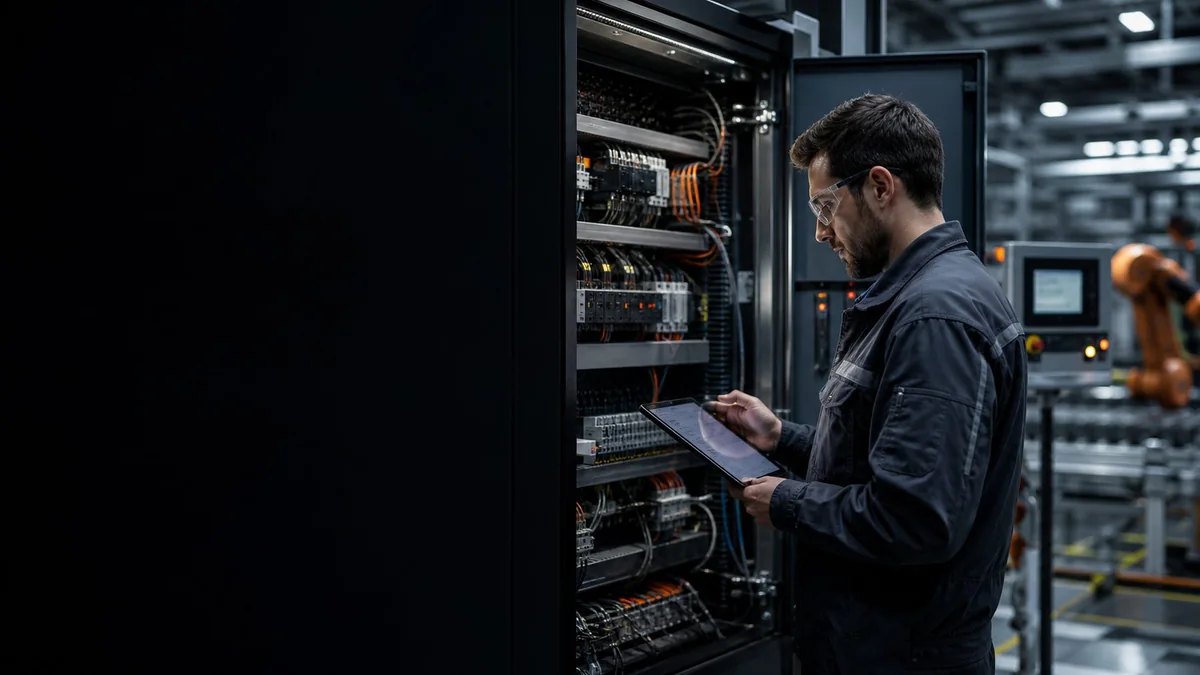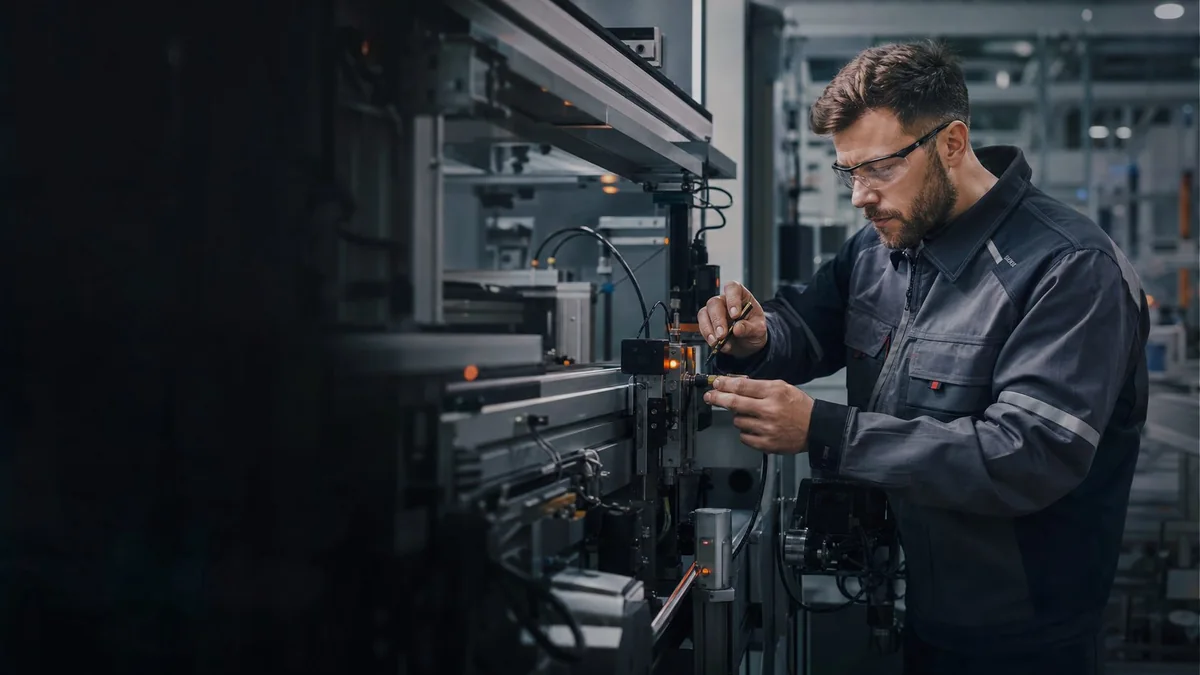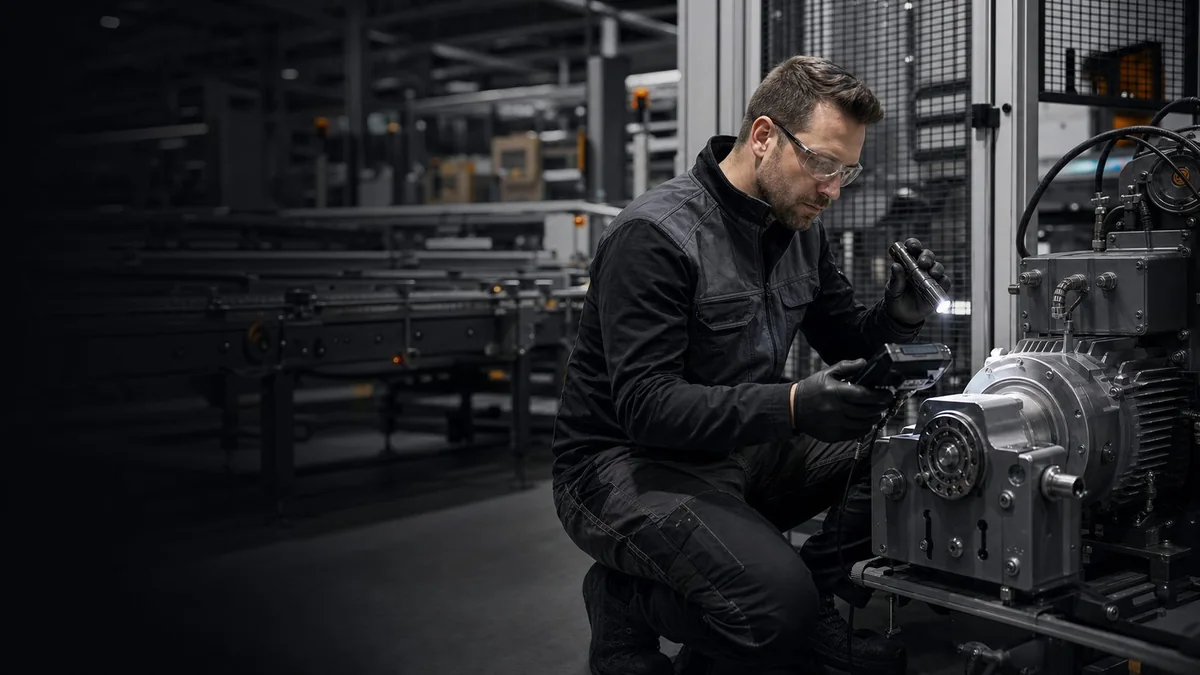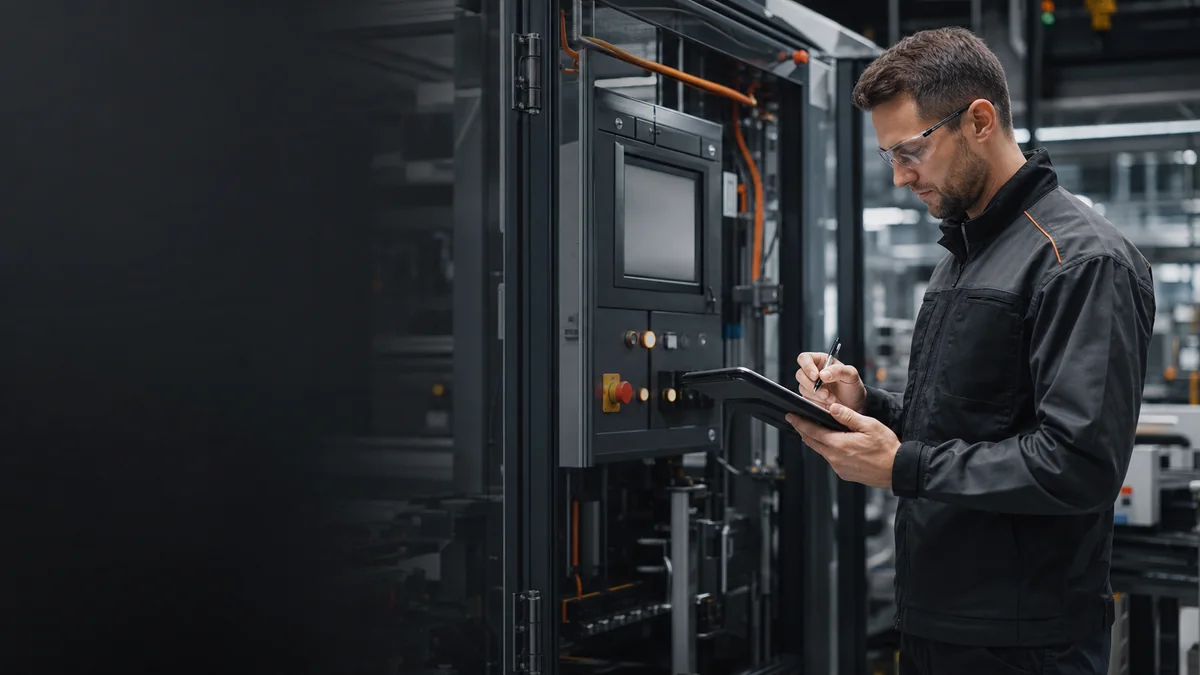
Maintaining robot cells
Preventive maintenance of the robot and the whole cell, so degradation is caught before it stops production.
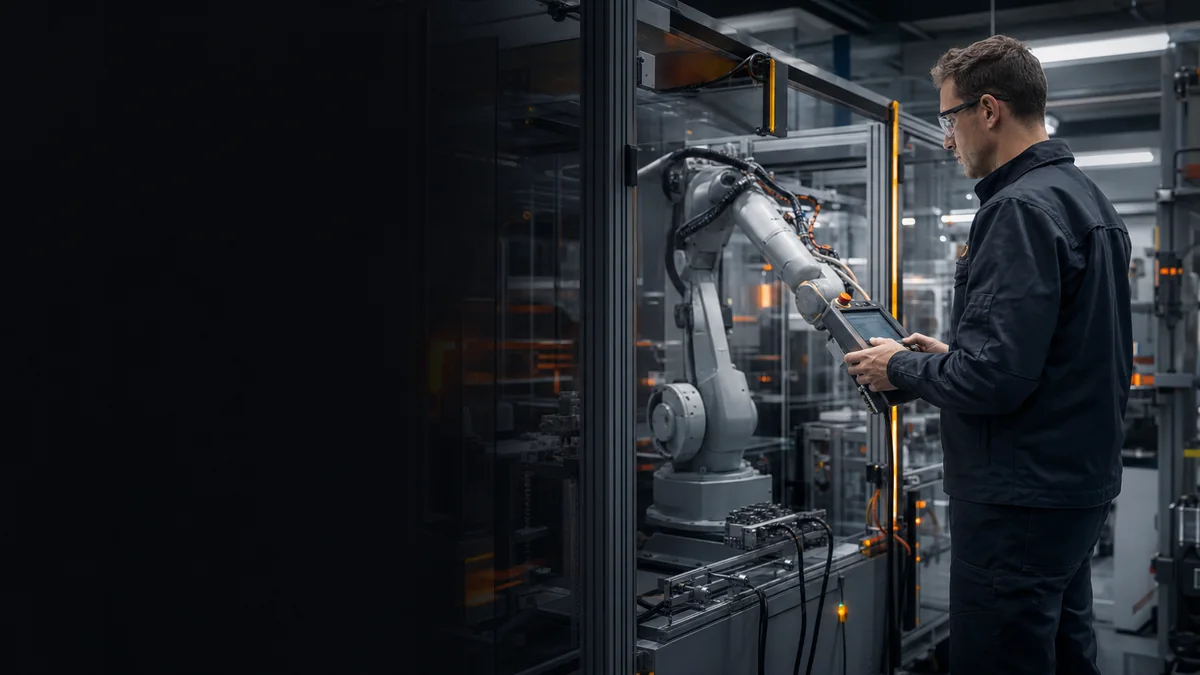
Technician profile
Explore profiles who keep industrial robot cells producing — the robot, its peripherals, its controller and everything that has to agree with it.
The problem
When a robot cell stops, the robot is usually the last thing at fault. The arm is the most reliable, most heavily engineered component in the cell. What actually stopped production is more often the gripper that lost pressure, the vision system that no longer recognises the part, the safety scanner that faulted, the conveyor that presented the part a few millimetres off, or the fixture that drifted. The robot is fine — it is faithfully doing the wrong thing because something around it changed.
This is why hiring "someone who knows robots" so often disappoints. A candidate who can teach points and edit a program but cannot diagnose why the vision system degrades every afternoon will not keep the cell running, because the program was never the problem. The robot cell is a system of agreeing parts, and the failures live in the agreements between them.
A robotics technician is defined by the cell, not the arm. Their value is keeping the whole cell — robot, peripherals, controller, safety, servo systems and the equipment feeding it — producing reliably. That overlaps with mechatronics and automation, but the robot cell as a specific environment carries instincts those profiles do not automatically have.
Role overview
A robotics technician installs, maintains, diagnoses and repairs industrial robot cells and the automated systems around them. The scope is the whole cell: the robot and its controller, the end effectors and grippers, the vision and sensor systems, the safety equipment, the servo and motion systems, and the peripheral equipment that presents and removes parts. Keeping all of that agreeing is the job.
Day to day, the work runs from preventive maintenance of the robot and peripherals, through diagnosing why a cell has slowed or stopped, to repairing or replacing failed components, adjusting and re-teaching where mechanical changes require it, and supporting the cell through product changes. Much of the skill is diagnostic: deciding, when the cell rejects a part, whether the cause is the robot, the vision, the fixture or the part itself.
They work in automotive plants, automation-heavy manufacturing, packaging and machine building, usually on shift and usually where robot cells are central enough to production that their downtime is measured closely. The specific robot brands and controllers vary, but the cell-level diagnostic instinct transfers between them far better than brand familiarity alone suggests.
When your company needs this profile: when robot cells are central to your production and their availability matters enough to justify dedicated skill. If your automation is broader than robots, an automation technician may fit; if the need is cross-domain machine diagnosis without a robot focus, mechatronics does. Robotics is the profile for keeping robot cells producing.
Responsibilities
Skills
Profiles may have experience with the areas below. Robot brand familiarity is the thing employers over-weight and cell-level diagnostic ability is the thing they under-weight.
A technician who deeply understands how a robot cell fails — how vision degrades, how grippers lose repeatability, how a fixture drift masquerades as a robot fault — adapts to an unfamiliar robot brand far faster than a brand specialist develops that diagnostic instinct. Ask about brands, but weight the answer accordingly: the transferable skill is the cell, not the pendant.
Equipment
Robotics experience is best judged by the cells worked on as complete systems, and whether the person kept them producing or only programmed them.
Industries
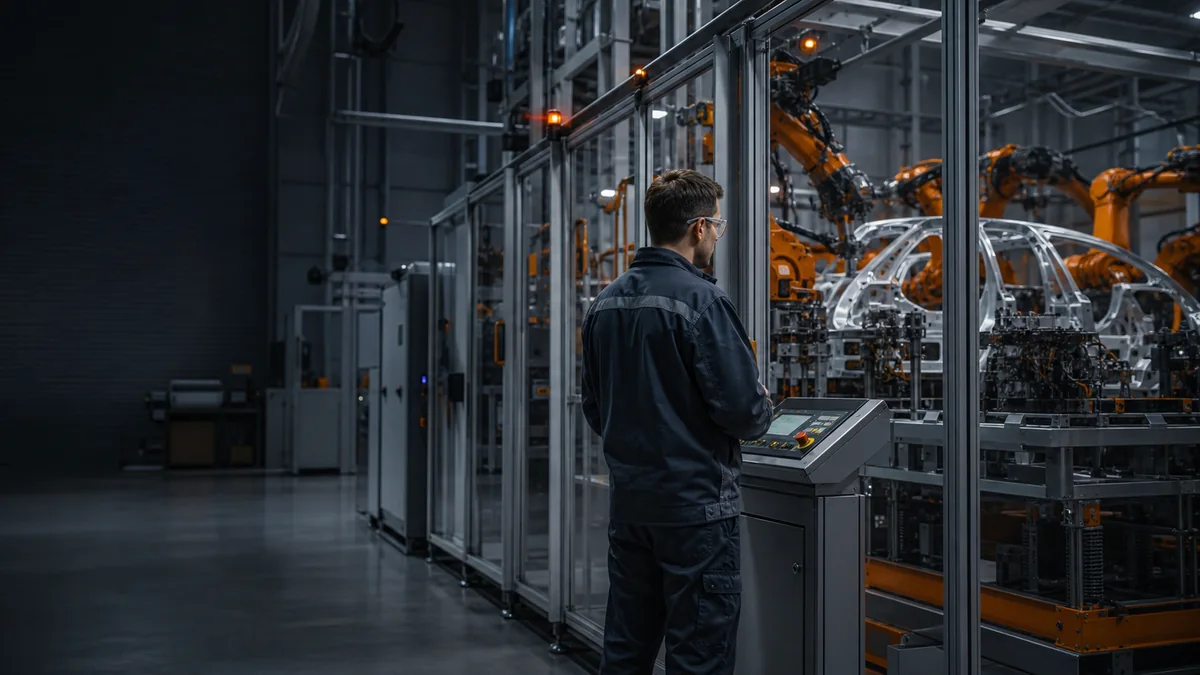
The core home of industrial robotics: welding, handling and assembly cells at volume.
Explore profile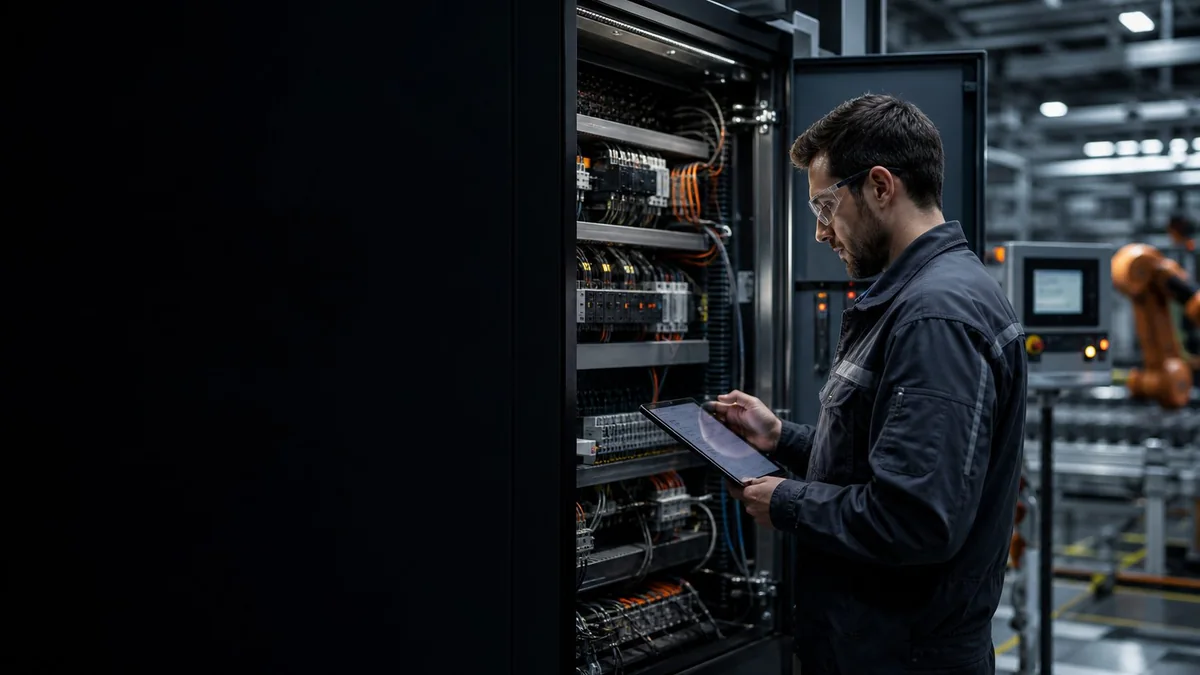
Integrated systems where robot cells are one part of a larger automated line.
Explore profile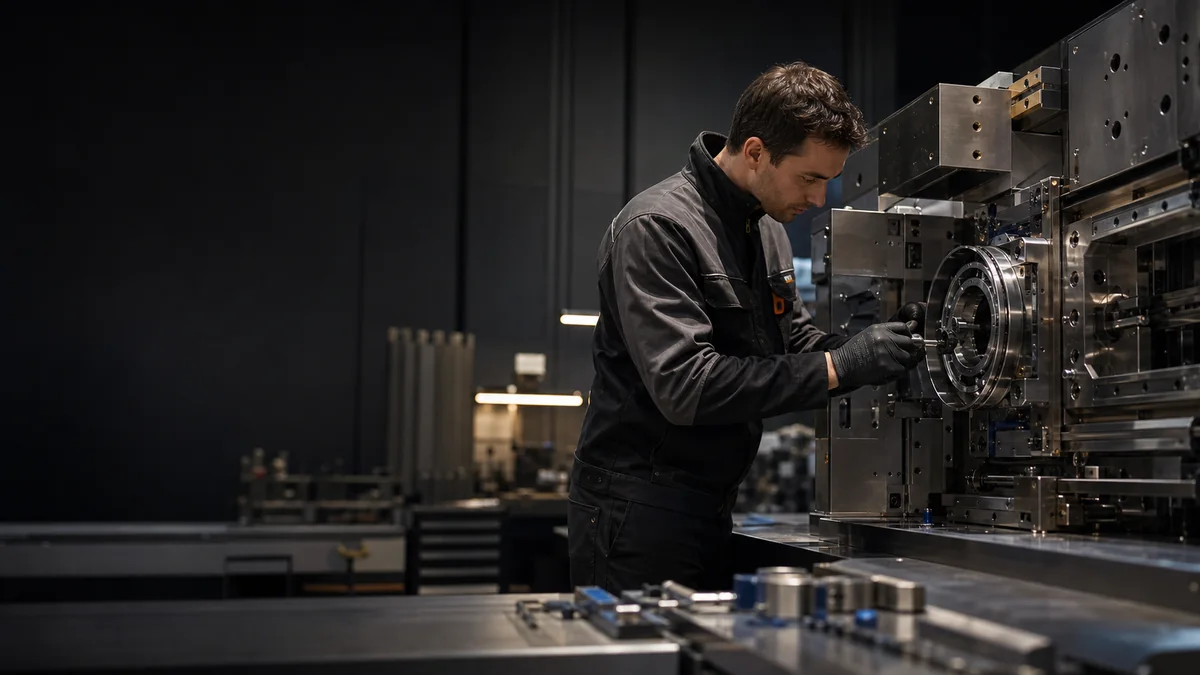
Building and commissioning robotic cells for other plants to run.
Explore profile
Robotic packaging, palletising and handling in high-availability lines.
Explore profile
Robot cells within a broader mixed-equipment plant.
Explore profileVerification
Whether they keep whole cells producing or mainly teach and program the robot. The most important distinction here.
Owning cell availability is different from writing programs. Establish which they actually did.
Which robot cells and controllers, weighted toward diagnostic depth over brand names.
Vision, grippers, fixtures, safety — where the real failures live.
How they isolate a cause across the whole cell. Ask for an intermittent reject.
Robot cells are high-energy environments. Safety discipline is non-negotiable.
Useful context; cell diagnostic experience matters more.
Cell drawings, controller documentation, safety layouts — and in which languages.
Robot-cell roles are frequently shift roles. Confirm early.
Depend on country, role and individual. Confirm with the competent authority.
Recruitment
Decide whether you need someone to keep cells producing or to program them, and name the cell environment rather than a robot brand.
Review robotics technician profiles on Candidate Force and see which cells and peripherals are represented.
Describe the cell as a system. Applicants self-select more accurately against that than against a brand.
Assess against cell-level diagnostic experience and safety discipline.
Verify qualifications, language and work authorisation individually.
FAQ
The whole cell, and that is the point. The robot arm is usually the most reliable part; what stops production is more often the gripper, the vision system, a safety scanner, a fixture or the equipment feeding parts in. A robotics technician keeps the entire cell — robot, controller, peripherals, safety and servo systems — producing reliably. Someone who only knows the robot itself will struggle with the faults that actually cause downtime.
No, though they overlap. A robot programmer writes and optimises the programs the robot runs. A robotics technician keeps the physical cell producing: preventive maintenance, diagnosis, repair, re-teaching after mechanical changes. Some people do both, but they are separate skills, and a strong programmer is not automatically able to diagnose why a cell degrades over a shift. Decide which you need and test for it.
Less than most employers assume. Cell-level diagnostic instinct — understanding how vision degrades, how grippers lose repeatability, how a drifting fixture mimics a robot fault — transfers between brands far faster than a brand specialist develops that instinct. Ask about brands, but weight demonstrated cell diagnosis above brand familiarity. A strong diagnostician adapts to an unfamiliar controller quickly.
They overlap. A mechatronics technician has cross-domain machine diagnosis in general; an automation technician owns the control layer of a line. A robotics technician focuses that instinct on the robot cell as a complete system, carrying the specific failure modes of vision, grippers, safety and servo systems that a general profile does not automatically have. If robot cells are central to your production, the focus is worth hiring for.
Commonly formal vocational or post-secondary qualifications in mechatronics, automation, electrical engineering or a related field, often with robot-specific experience or training on top. The Western Balkans has established technical education pathways and automotive-sector robotics experience. Level, specialisation and recognition vary by individual and country and must be confirmed with the competent authority.
On Candidate Force. Balkan Technician explains the profile so you can scope the cell environment and distinguish cell-keeping from programming; Candidate Force is where you explore candidates, publish the vacancy, receive applications and manage the process.
Explore robotics technician profiles from the Western Balkans.