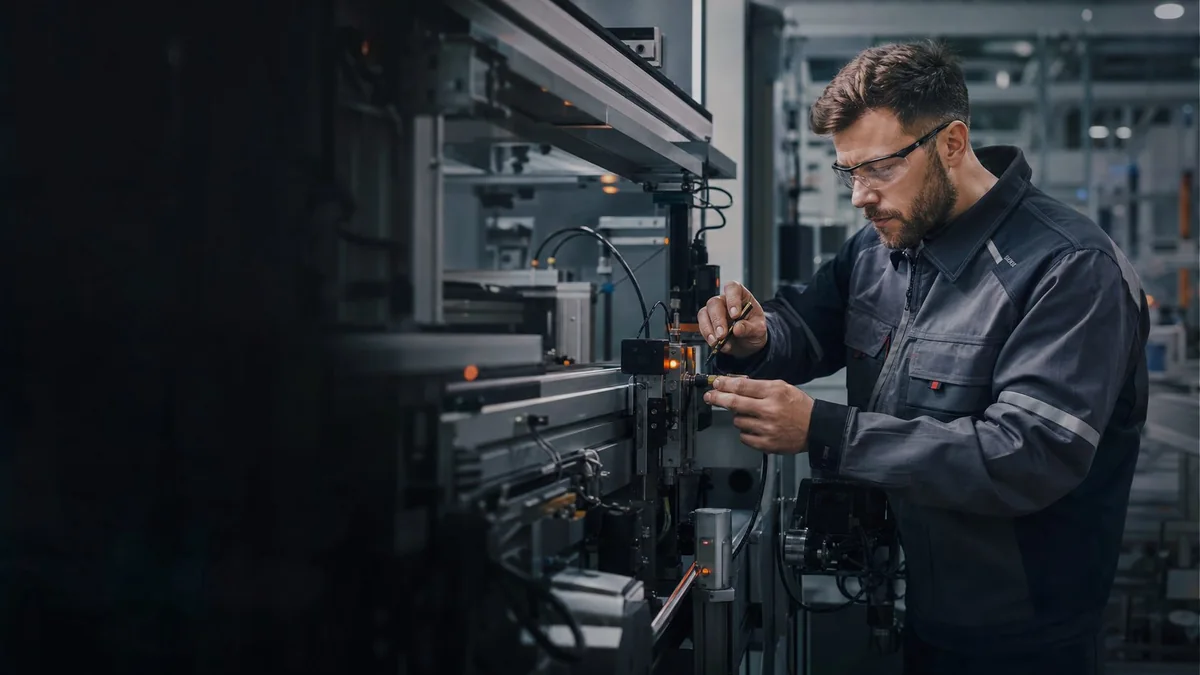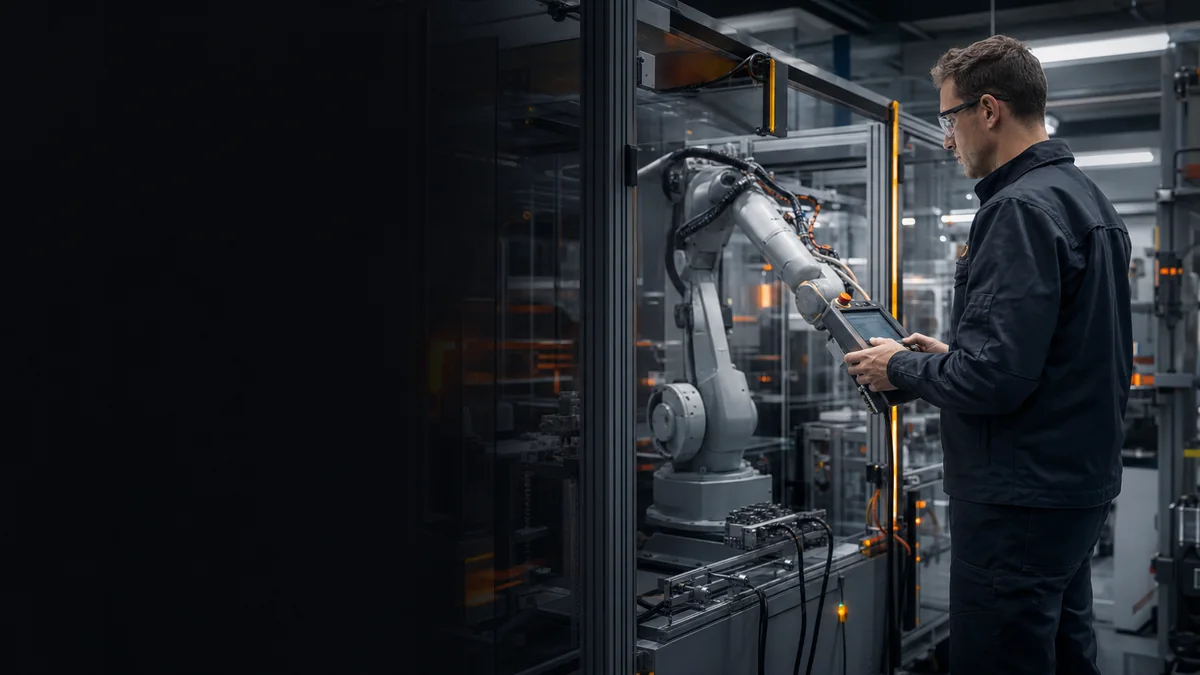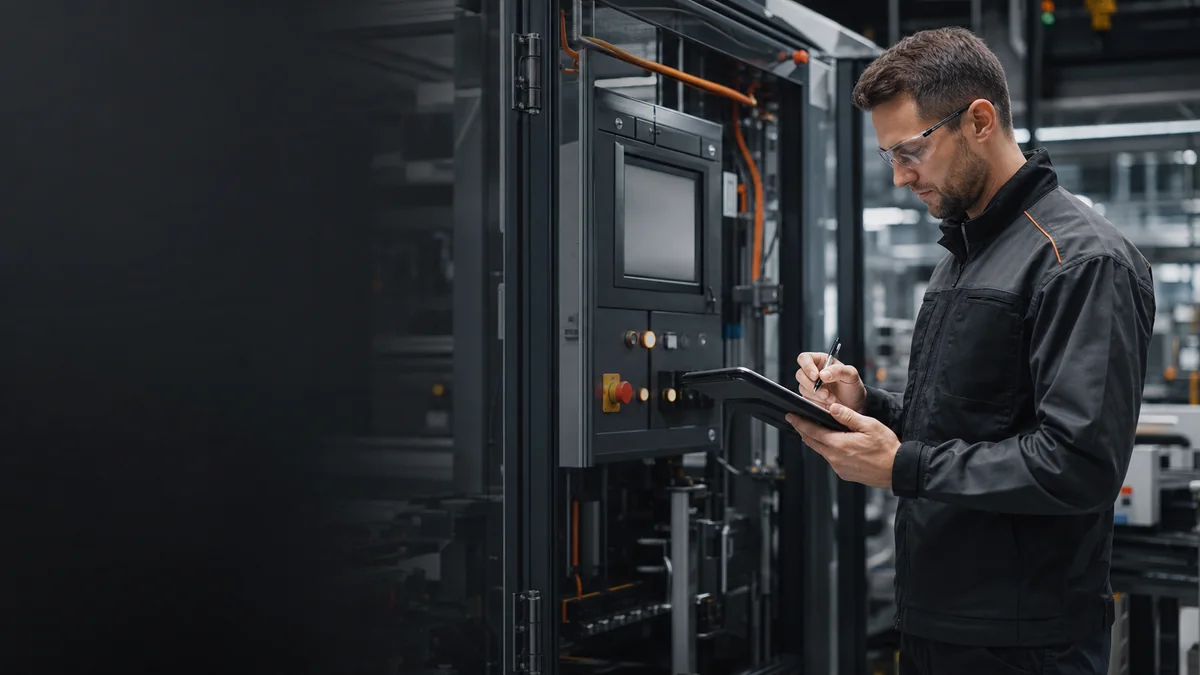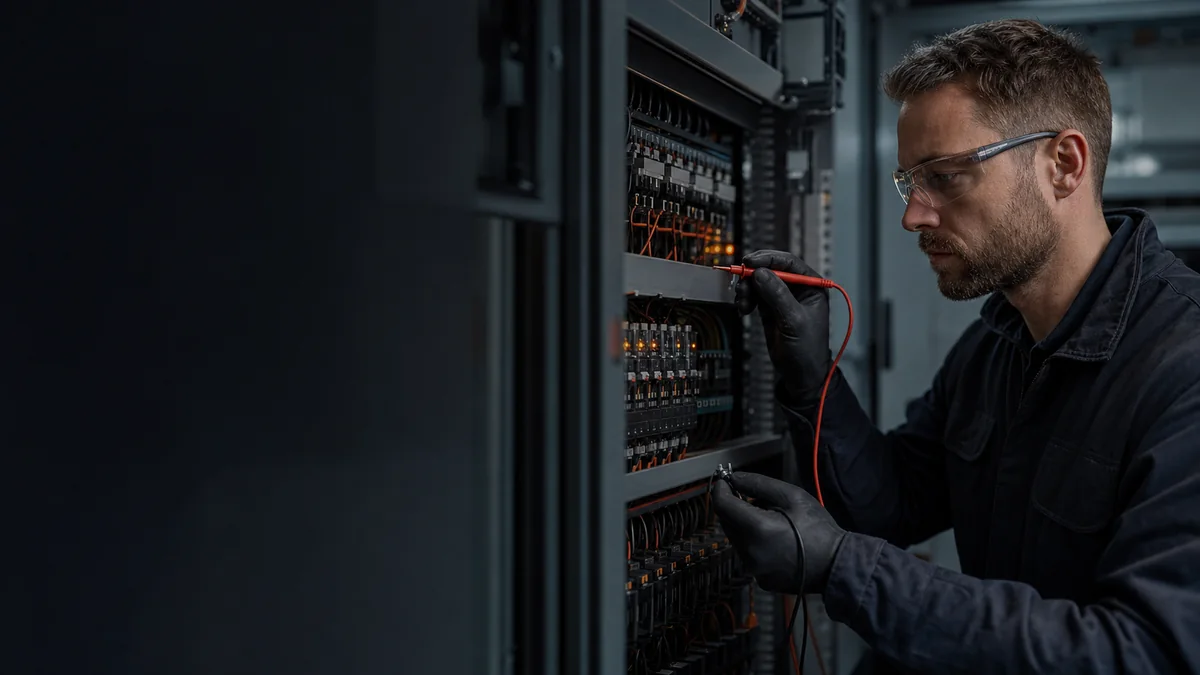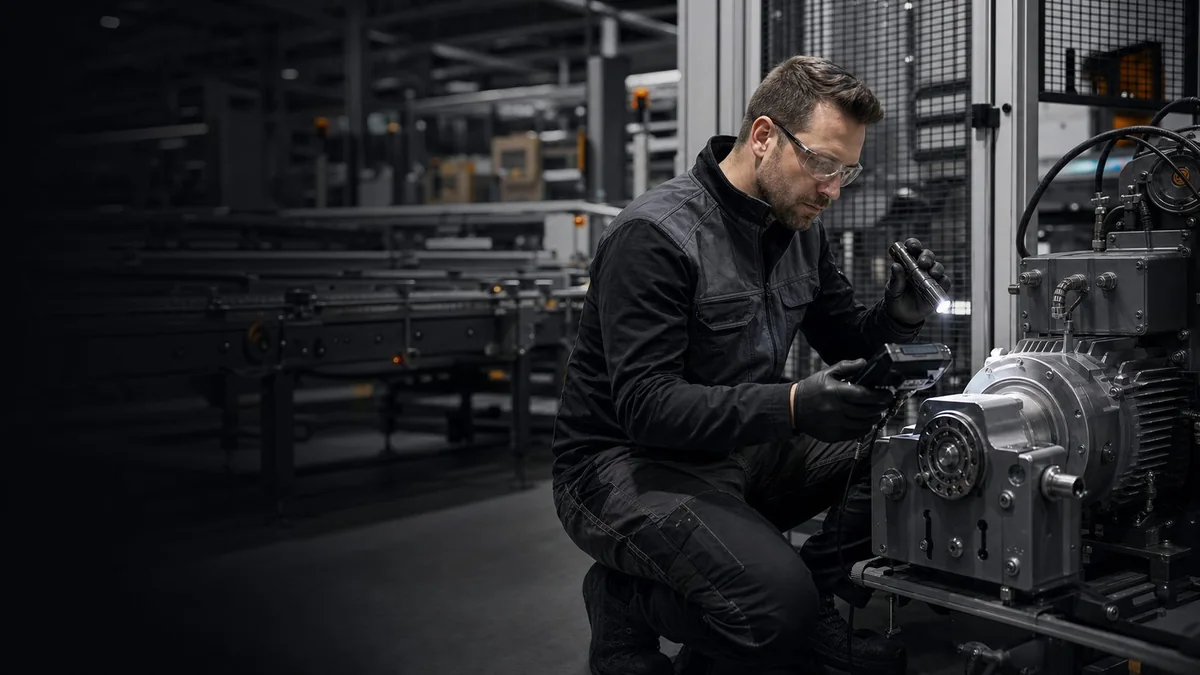
Supporting automated lines
Keeping automated production running correctly through normal operation, restarts and changeovers.
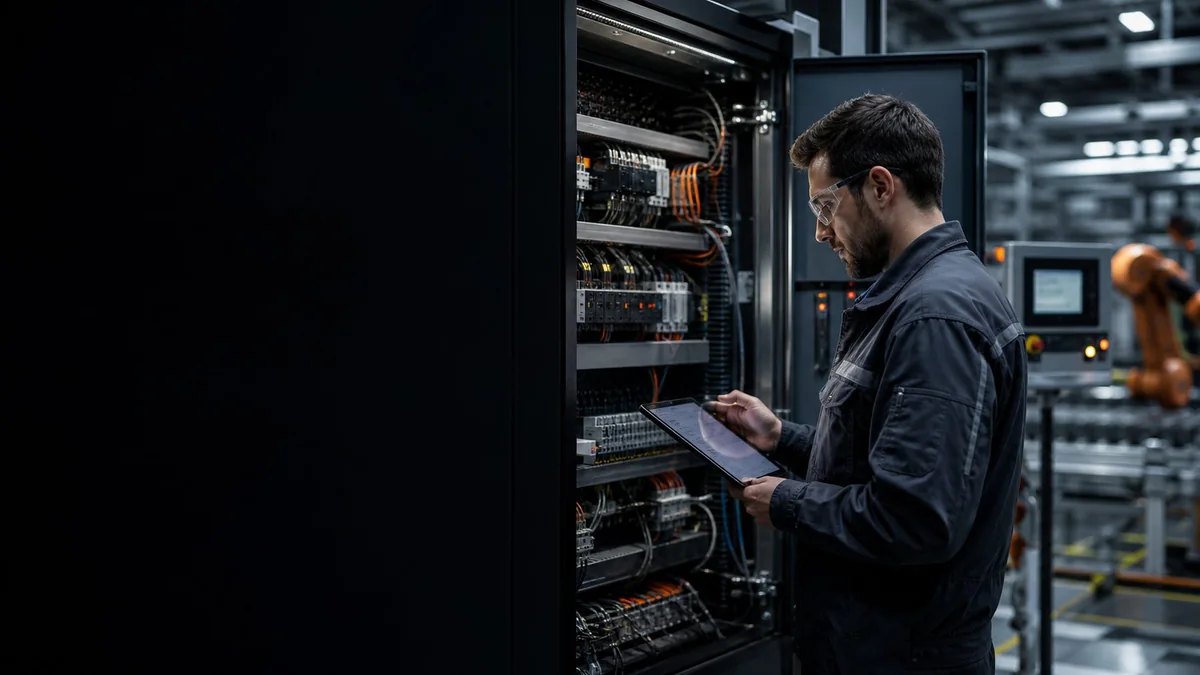
Technician profile
Explore profiles who work at the control layer — the people who can tell you why the line is running, but running wrong.
The problem
A stopped line is an easy problem. It announces itself, everyone agrees it is a problem, and someone is sent. The expensive automation faults are the ones that never trigger an alarm: the cell that drifts two per cent below rated throughput, the station that rejects good parts once a shift, the sequence that only fails on the third product variant. The line runs. The numbers quietly do not add up.
These faults are invisible to a mechanical inspection because nothing is broken. They are invisible to the operator because the machine looks normal. And they are usually invisible to maintenance, because maintenance is measured on availability — and availability is fine. The problem lives in the control layer, in the interaction between what the PLC believes and what the equipment is actually doing.
An automation technician is defined by that layer. Where a mechatronics technician is defined by breadth across mechanics and electronics, an automation technician is defined by depth into control: reading the logic, following the signal from sensor to input to decision to output, and knowing whether the process is behaving as the program assumes.
Role overview
An automation technician supports automated production lines and control systems in operation. The work centres on the signal path: a sensor detects a condition, the PLC evaluates it against its logic, an actuator acts. Most automation faults are a break somewhere in that chain — a sensor reporting the wrong thing, a program assuming a timing that the equipment no longer meets, an actuator acting on a decision that was made from bad information.
Practically, the job is reading PLC diagnostics and logic to locate a fault, verifying sensor and actuator behaviour against what the program expects, adjusting process parameters, supporting the line through changeovers and product variants, and working with the mechanical side when the control problem turns out to have a physical cause.
The boundary that matters most in hiring is reading versus writing. Most automation technicians read PLC logic fluently and use it diagnostically without modifying programs. Some write and modify. These are genuinely different skills, priced differently, and conflating them is the most common mis-hire in this profile.
When your company needs this profile: when your equipment is automated and your problems are behavioural rather than physical — throughput drift, intermittent rejects, sequence faults, changeover instability. If your issue is cross-domain diagnosis on the machine itself, mechatronics fits better. If you need the control system designed or substantially reprogrammed, that is an automation engineer, not a technician.
Responsibilities
Skills
Profiles may have experience with the areas below. As always, this is the territory of the role rather than a claim about any individual candidate.
The single most useful thing you can establish is the depth of their PLC work. Ask directly: do they read logic, or do they modify it? Both answers are valuable and neither is a weakness — but a technician who reads fluently and a technician who programs are solving different problems, and a vacancy that does not distinguish them will attract both and assess neither properly.
Equipment
Automation experience is highly contextual. A technician from a bottling line and one from a robotic welding cell both know PLCs and share almost no process instincts.
Industries
Integration and control as the core of the business rather than a support function.
Explore profile
High-volume lines where a fraction of a per cent of throughput is a measurable loss.
Explore profile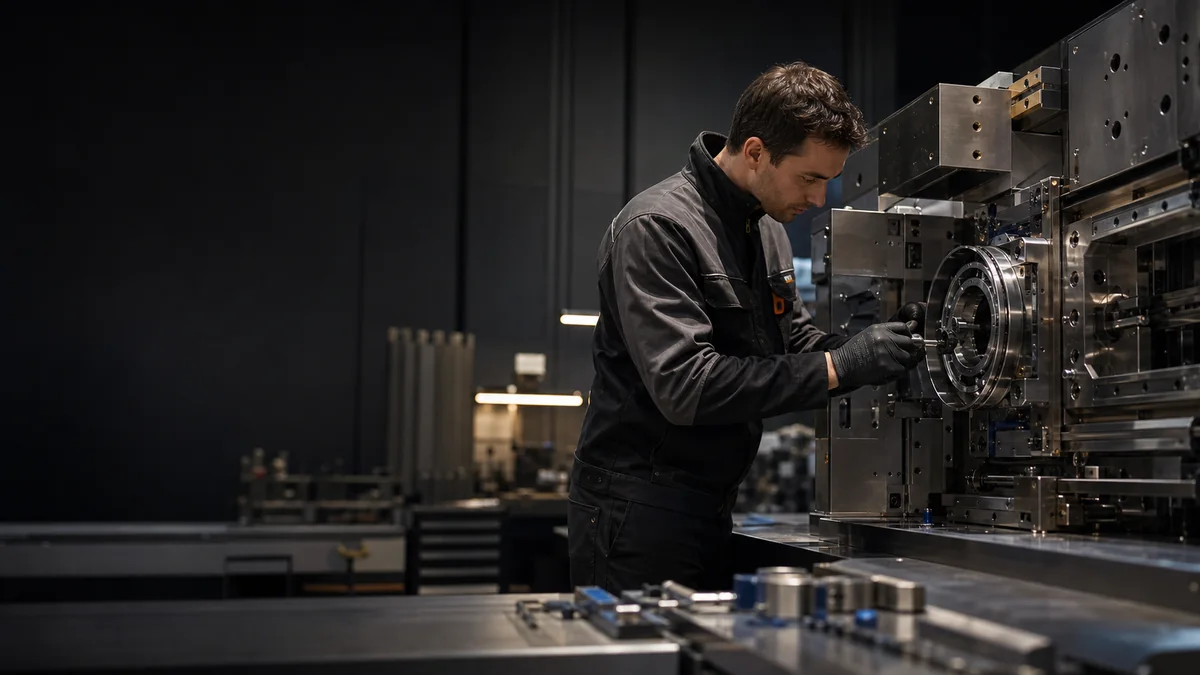
Building and commissioning the controlled systems other plants will run.
Explore profile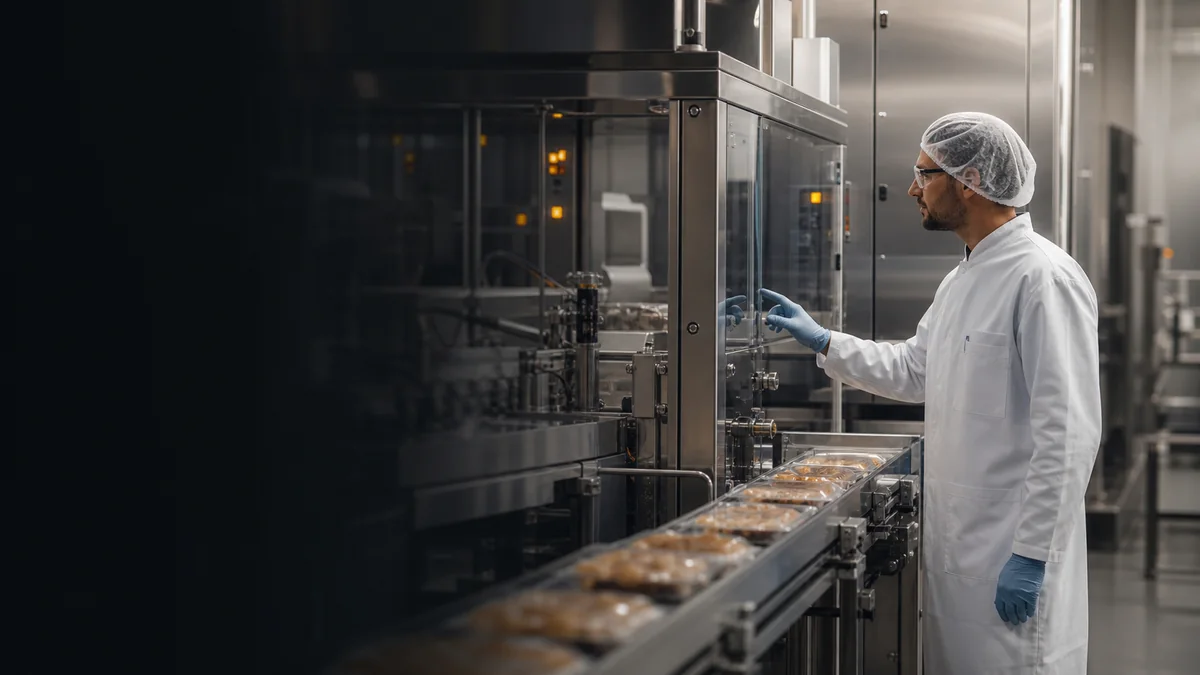
Filling and packaging lines with constant changeovers and variant behaviour.
Explore profile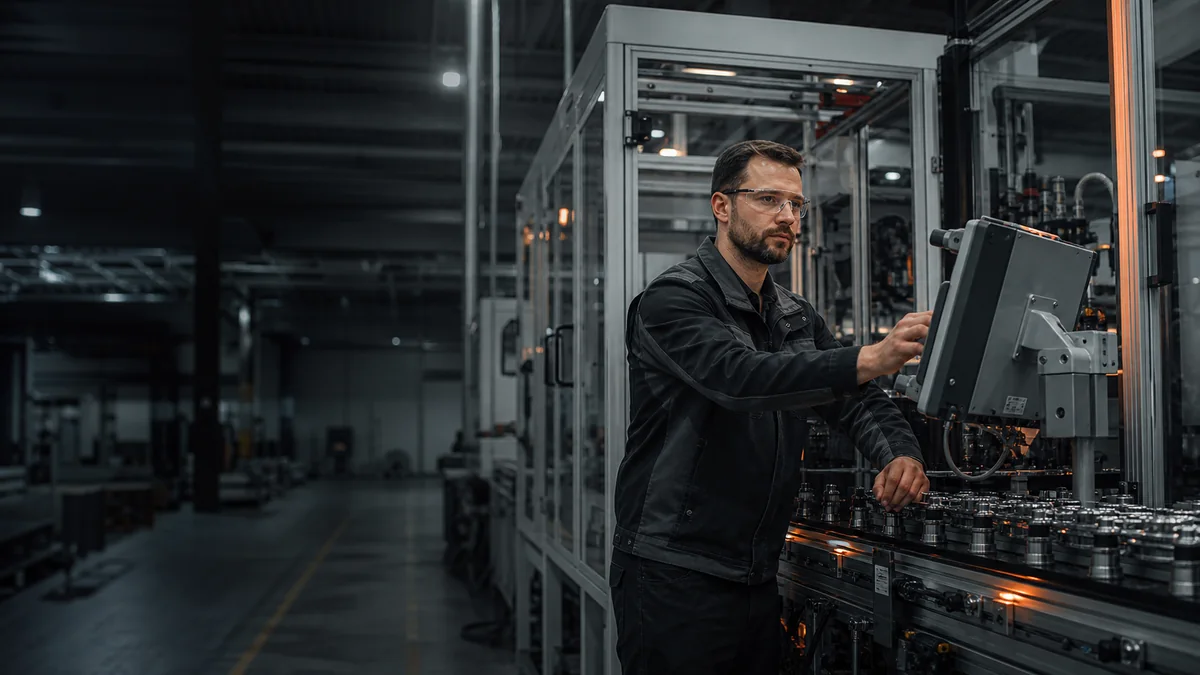
Automated cells inside a broader mixed-equipment plant.
Explore profileVerification
The most important single question in this profile, and the one most vacancies never ask.
Time spent on automated equipment in operation, not time in a plant that owned some.
Which lines, which cells, which control environments — and how close they are to yours.
Establishes the route. It does not establish control depth, which must be tested separately.
Ask about a fault that produced no alarm. Listen for whether they reason along the signal path.
Control schematics, I/O lists and sequence descriptions — and in which languages.
Safety circuits, interlocks, and the discipline not to bypass them under production pressure.
Automation support is frequently a shift role. Confirm it early.
Relevant if the role supports multiple sites or customer installations.
Depend on country, role and individual. Confirm with the competent authority.
Recruitment
Decide whether you need someone who reads control logic or someone who writes it, and say so in the vacancy.
Review automation technician profiles on Candidate Force and see which control environments are represented.
Name the systems and the control environment. Applicants self-select accurately against those and poorly against a title.
Assess against systems supported and diagnostic reasoning.
Verify qualifications, language and work authorisation individually.
FAQ
An automation engineer designs, specifies and programs the control system: they decide how it should work. An automation technician keeps the built system behaving the way it was designed to: they diagnose, adjust and support it in operation. The distinction matters commercially — hiring an engineer for technician work is expensive and usually ends in the engineer leaving; hiring a technician for engineering work leaves the design gap unfilled.
Some do, many do not, and you must not infer it from the title. The large majority read PLC logic fluently and use the diagnostics to isolate faults without writing or modifying programs — a genuinely different and genuinely valuable skill. If your role requires program modification, test it explicitly and expect it to narrow the field considerably.
No. Automation is defined by depth into the control layer; mechatronics by breadth across mechanics, electronics and control. Many candidates have both to some degree. Which one you need depends on whether your line fails physically or behaves incorrectly while running.
Ask, but weigh the answer carefully. Platform familiarity transfers better than most employers assume — a technician who reasons well about signal paths and sequence behaviour adapts to an unfamiliar platform far faster than a platform specialist develops diagnostic reasoning. Treat a specific platform as a nice-to-have unless your environment genuinely allows no ramp-up.
Frequently, as part of an automated line — handling cells, peripherals, safety equipment and the interaction between robot and line control. Deep work on robot controllers and servo systems is closer to a robotics technician. Verify the specific robot experience rather than assuming it.
Commonly formal vocational or post-secondary qualifications in automation, electrical engineering, mechatronics or control technology. The Western Balkans has established technical education pathways. Level, specialisation and recognition vary by individual and country; formal recognition must be confirmed with the competent authority.
On Candidate Force. Balkan Technician explains the profile so you can scope the role at the right depth; Candidate Force is where you explore candidates, publish the vacancy, receive applications and manage the process.
Explore profiles with experience in PLC environments, control systems and line diagnostics.